
Weightlifting at the 2008 Summer Olympics
2008 Olympic weightlifting marred by doping disqualifications.
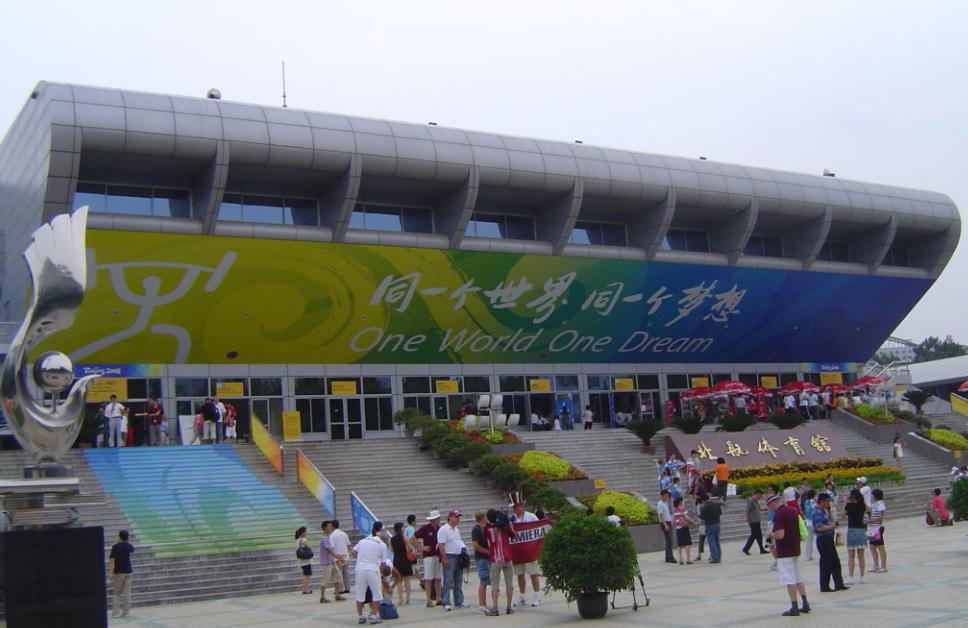
The weightlifting events at the 2008 Summer Olympics took place from August 9 to 19 at the Beihang University Gymnasium in Beijing, China. A later review of athlete samples in 2015, 2016, and 2017 led to major changes in the medal standings. Twenty-six lifters were disqualified, among them 16 medal winners and four others who were set to receive medals from those disqualified.
- event
- Weightlifting at the 2008 Summer Olympics
- location
- Beihang University Gymnasium, Beijing, China
- dates
- August 9 to August 19
- participants
- 253 weightlifters from 83 nations
- disqualified_lifters
- 26
- disqualified_medalists
- 16
Lore & Background
The weightlifting competition at the 2008 Summer Olympics featured men's and women's events held at the Beihang University Gymnasium. A total of 253 athletes from 83 nations competed. Years later, re-analysis of doping samples from 2015, 2016, and 2017 led to the disqualification of 26 lifters, including 16 medalists and four who would have inherited forfeited medals.
Reader's Guide
The 2008 Olympic weightlifting competition is historically significant due to the extensive doping disqualifications that reshaped the medal table. The re-analysis of samples in 2015, 2016, and 2017 stripped medals from 16 athletes, including multiple gold, silver, and bronze winners across both men's and women's categories. This event highlighted the ongoing challenges of anti-doping enforcement in Olympic weightlifting and led to a revised official record of results. The disqualifications affected every weight class from women's 48 kg to men's 105 kg, underscoring the widespread nature of the violations. The legacy of these Games in weightlifting remains one of controversy and cautionary lessons for future competitions.
Did You Know?
- 26 lifters were disqualified after re-analysis of their 2008 samples in 2015, 2016, and 2017.
- 16 medalists were among those disqualified.
- Four lifters who stood to inherit forfeited medals were also disqualified.
- Disqualifications occurred in both men's and women's events across multiple weight classes.
Roots in Ancient Athens and the Early Experiments
Weightlifting's Olympic story stretches back further than most modern sports. The discipline first appeared on the programme at the 1896 Games in Athens, Greece, where athletes performed a one-hand lift and a two-hand lift. The event reappeared at the 1904 Olympics, this time featuring a two-hand lift alongside an all-around dumbbell competition. After that 1904 appearance, the sport vanished from the Olympic calendar for a full sixteen years. It was not until 1920, when the Games returned to Antwerp, Belgium, that weightlifting re-entered the programme — and from that point forward it has been contested at every single Summer Olympics without interruption. This remarkable continuity, spanning more than a century of global conflict, political upheaval, and evolving athletic standards, makes weightlifting one of the most consistently present disciplines in the modern Olympic tradition. The early iterations, with their simple single- and two-hand lifts, bear little resemblance to the highly structured, multi-class competition that would eventually define the sport at the world's greatest stage.
The 1920 Reset: Birth of Weight Classes
When weightlifting returned to the Olympic programme in Antwerp in 1920, it arrived with a fundamentally restructured format. In the earliest incarnations at Athens and St. Louis, every competitor had been required to attempt the same lifts regardless of their individual body weight, meaning a smaller athlete and a much larger one would face identical challenges. The 1920 overhaul introduced a system of weight classes, partitioning the field so that lifters competed against others of similar size. This was a transformative change for the sport's competitive landscape. Since that pivotal reset, the precise number of weight classes and the specific upper and lower limits for each have been revised on multiple occasions, reflecting the growing body of scientific knowledge about human physiology and the sport's expanding global participation. The evolution from a single undifferentiated field to a finely calibrated set of divisions underscores how much the Olympic weightlifting competition has matured over more than a century of continuous presence at the Games.
Women's Path to the Olympic Podium
For decades, Olympic weightlifting was exclusively a men's affair. That changed at the 2000 Summer Olympics in Sydney, Australia, where women's weightlifting made its long-awaited debut on the Olympic stage. The inaugural women's competition was organized into seven weight classes, giving female athletes a structured and competitive framework comparable to the men's divisions. This milestone represented a significant expansion of the sport's Olympic footprint, adding an entirely new set of events to the Games programme. The inclusion of women at the Sydney Games marked the culmination of years of advocacy and the growth of women's weightlifting on the international stage. From that point forward, women's events became a permanent fixture alongside the men's competition, ensuring that the sport's Olympic story encompassed athletes of both genders. The seven-class structure established in Sydney set the template for how women's weightlifting would be organized in subsequent Olympic cycles, cementing its place in the sport's ongoing evolution.
Medal Governance and the Pursuit of Multiple Golds
The Olympic weightlifting medal table is not always a fixed record. A March 2022 decision by the Court of Arbitration for Sport stripped a gold medalist of their title in the men's 77-kilogram event at the 2016 Games, and as of August 2024 those medals had still not been formally reallocated to the next finishers. This ongoing administrative process highlights how even completed Olympic competitions can remain subject to revision years after the fact. On the competitive side, the sport has a rich tradition of athletes who have claimed at least two Olympic gold medals, a feat that places them among the most decorated lifters in the history of the discipline. Tracking these multiple-medal winners — including those still active and those who have retired — provides a window into the sport's most dominant eras and its most enduring champions. The interplay between governance decisions and athletic achievement shapes the final narrative of Olympic weightlifting.
Gallery
Frequently Asked Questions
Where and when were the weightlifting competitions held at the 2008 Summer Olympics?
All the weightlifting events ran from August 9 through August 19, 2008. The venue was the Beihang University Gymnasium in Beijing, China.
How many athletes and nations took part in the 2008 Olympic weightlifting program?
A total of 253 lifters representing 83 different countries competed across the various weight classes.
What was the major doping scandal that hit the 2008 Olympic weightlifting results?
After the Games, WADA retested stored samples in 2015, 2016, and 2017, which uncovered widespread performance-enhancing drug use. As a result, 26 lifters were stripped of their results, reshuffling the medal tables in several weight classes.
How many medal winners lost their medals because of the 2008 weightlifting doping cases?
Sixteen original medalists were disqualified, and an additional four athletes who would have been promoted to the podium after those disqualifications were also removed, bringing the total to 26 stripped lifters.
Why do fans still talk about the 2008 Olympic weightlifting events years later?
The scale of the disqualifications made it one of the most dramatic post-Games rewrites in Olympic history. Because so many podiums were overturned, the 2008 weightlifting results remain a frequent topic of debate among lifting fans.
More in Weightlifting at the Summer Olympics 1-24
Spotted an error? Know more?
This is a living reference — every entry is fact-audited, and reader corrections feed straight into our audit queue. Suggest an edit · See this site's audit record